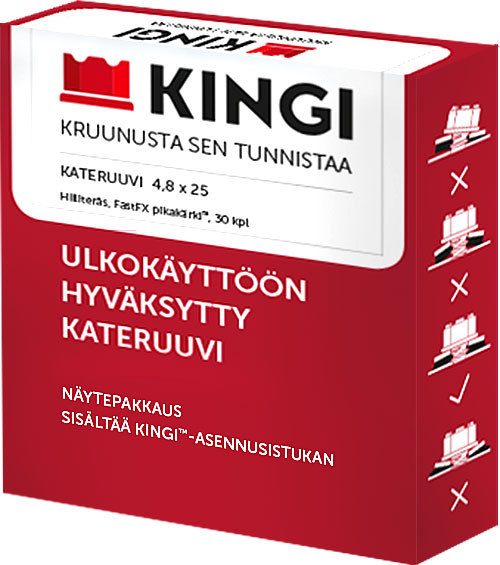
Finnish innovation
The manufacture of KINGI® roofing screws makes use of high-level expertise and manufacturing methods that ensure a high-quality end result.
KINGI® roofing screw is a Finnish innovation. Galvanized steel roofing profiles have been used in Finland since the 1950s and factory-painted steel roofing profiles since the 1970s. Initially, nails with sealing washers were used to fasten roofing sheets, and later, as cordless drills developed, screws. The advantage of screws over nails is that they do not rise from their base in the same way as nails when the batten moves. Another advantage is the more controlled tightening of the sealing washer during installation. A screw provides a more reliable and long-lasting watertight fastening.
For over 30 years, roofing screws have been used to fasten steel roofing, with paint coatings that do not meet the minimum level for corrosion protection coating. Jorma Kinnunen set out to find a solution to this problem. In addition, the Pural® coating he had developed earlier in the 1990s needed an equally durable screw.
In a long product development process, the latest pre-treatment and painting expertise was combined with screw coating, resulting in a genuine Finnish innovation, the KINGI® roofing screw.
How the KINGI® roofing screw is manufactured
BASE PLATE
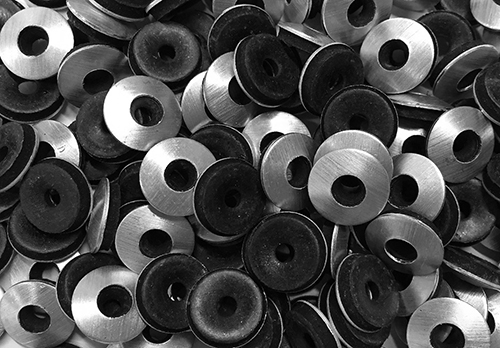
The base plate is made from so-called marine-grade aluminium, which is stronger than ordinary aluminium. The secret to marine-grade aluminium’s corrosion resistance is the magnesium added to the aluminium alloy. While the strength of basic aluminium is at least 55 megapascals, the strength of the aluminium in KINGI® roofing screws is at least 130 MPa. The weather-resistant EPDM rubber used in the base plate has been specifically developed for the base plate of roofing screws. The rubber is vulcanised onto the specially treated surface of the aluminium.
SCREW BLANK
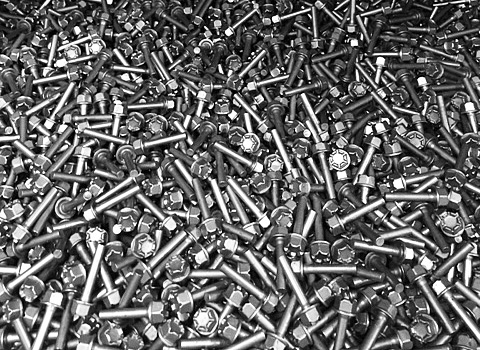
The CrownD-shaped head, or crown, of the screw blank is created as a result of two work stages. After that, a FastFX thread is made on the screw blank.
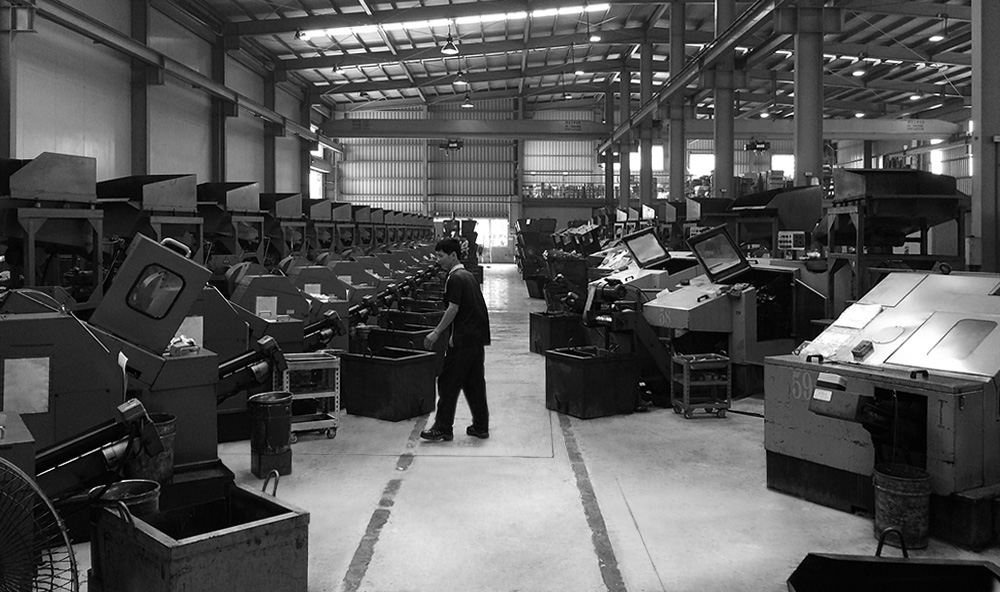
The pre-formed screw blank is hardened to achieve a hardness that ensures good drillability. The aforementioned stages are carried out in Taiwan, where the best expertise in screw blank manufacturing is concentrated. Most of the screws used in Western countries are made there.
DURABL3 COATING
Next, the screw blank is cleaned of the protective oil required during transport and other impurities. The cleaned screw blank undergoes electrogalvanizing, which cathodically protects the steel if paint damage occurs. In addition, the micro-rough surface of the electrogalvanizing ensures the best adhesion for the paint, because it maximizes the adhesion surface area and improves the anchoring of the paint to the metal surface. In electrogalvanizing, no spikes or protrusions form on the zinc surface that would locally thin the paint layer. The thickness of the electrogalvanizing has been optimized so that it is thick enough to provide proper protection for the screw steel, but not too thick to impair the screw’s drilling performance.
At the final stage of the galvanizing process, the screw blank undergoes modern silane pretreatment, which ensures paint adhesion and increases corrosion resistance.
The Radialco design ensures sufficient coating thickness even at corners exposed to wear. Corrosion resistance is completed by the Durabl3 coating, which Kingi Oy produces in Nurmijärvi, at the world’s first Durabl3 painting line.
This is how KINGI® – the only approved roofing screw – is created.
Quality tested
The entire manufacturing chain is ISO 9001 quality certified. Product quality assurance is carried out in accordance with the SFS-EN ISO 3269 and SFS-EN ISO 10666:1999 standards. Quality is regularly monitored in quality tests conducted by an external research institute.
- the dimensions of the screw are checked in two different stages
- the drilling time of the screw is tested in two different stages
- the torsional strength is checked in two different stages
- the thickness and quality of the electro-galvanizing are checked
- the risk of hydrogen embrittlement is assessed
- the paint adhesion is tested in two different stages
- the suitability of the screw for the installation chuck is checked
In addition, screws from each painting batch are stored by batch number for at least 20 years for possible follow-up inspections. The quality of the coating system is continuously monitored through corrosion tests conducted by an external research institute.
Download the ISO 9001:2015 quality certificate of Kingi Oy’s certified quality system here.
Blue and white choice
KINGI® roofing screw has been awarded the Key Flag symbol. Most of the manufacturing of the KINGI® roofing screw is carried out in Finland. From foreign suppliers, only those semi-finished products and raw materials that cannot be procured from Finland are purchased. The KINGI® roofing screw is a blue and white choice, as purchasing it provides work and creates well-being in Finland.